artist
Hilma af Klint
Hilma af Klint1
Hilma af Klint created an extraordinary body of abstract paintings beginning in 1906, before abstraction gained recognition through its canonical modernist figures. Her work brings spiritual inquiry, botanical observation, and symbolic systems into a visual language whose belated reception challenges how art history assigns significance.
Garden notes
1 Hilma af Klint — Hilma af Klint (1862–1944) was a Swedish artist whose spiritually informed paintings made her an early pioneer of abstraction.
Paths from here
quote
“Seeing comes before words. The child looks and recognizes before it can speak.”
John Berger
quote
“Interpretation is the revenge of the intellect upon art.”
Susan Sontag
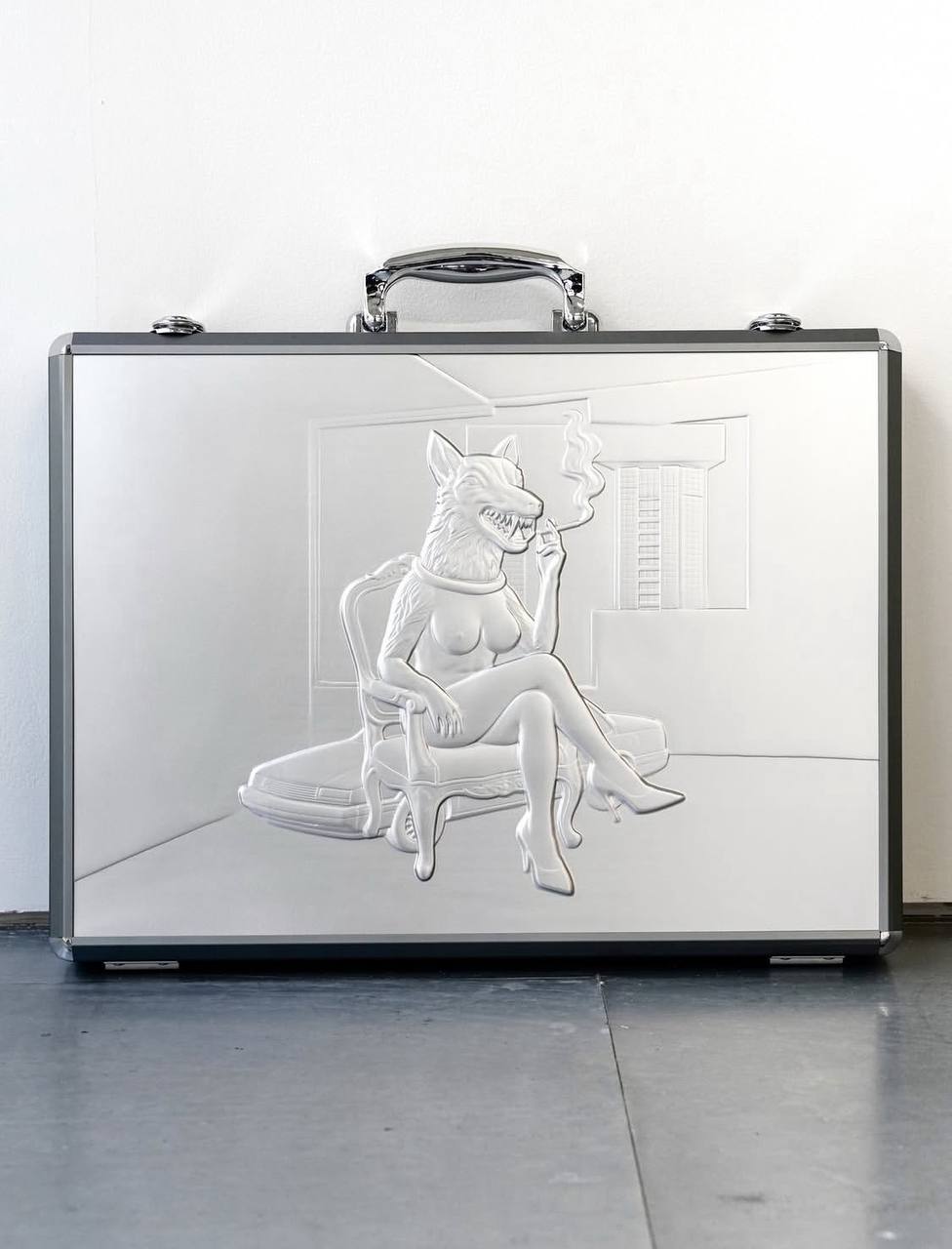
exhibition
DRIFT at CARE
DRIFT is a group exhibition at CARE, London, featuring nine artists. The supplied image shows a metallic briefcase-like object bearing a monochrome scene of a smoking, wolf-headed figure in heels—an intriguing collision of bodily fantasy, decorative imagery, and the equipment of business.